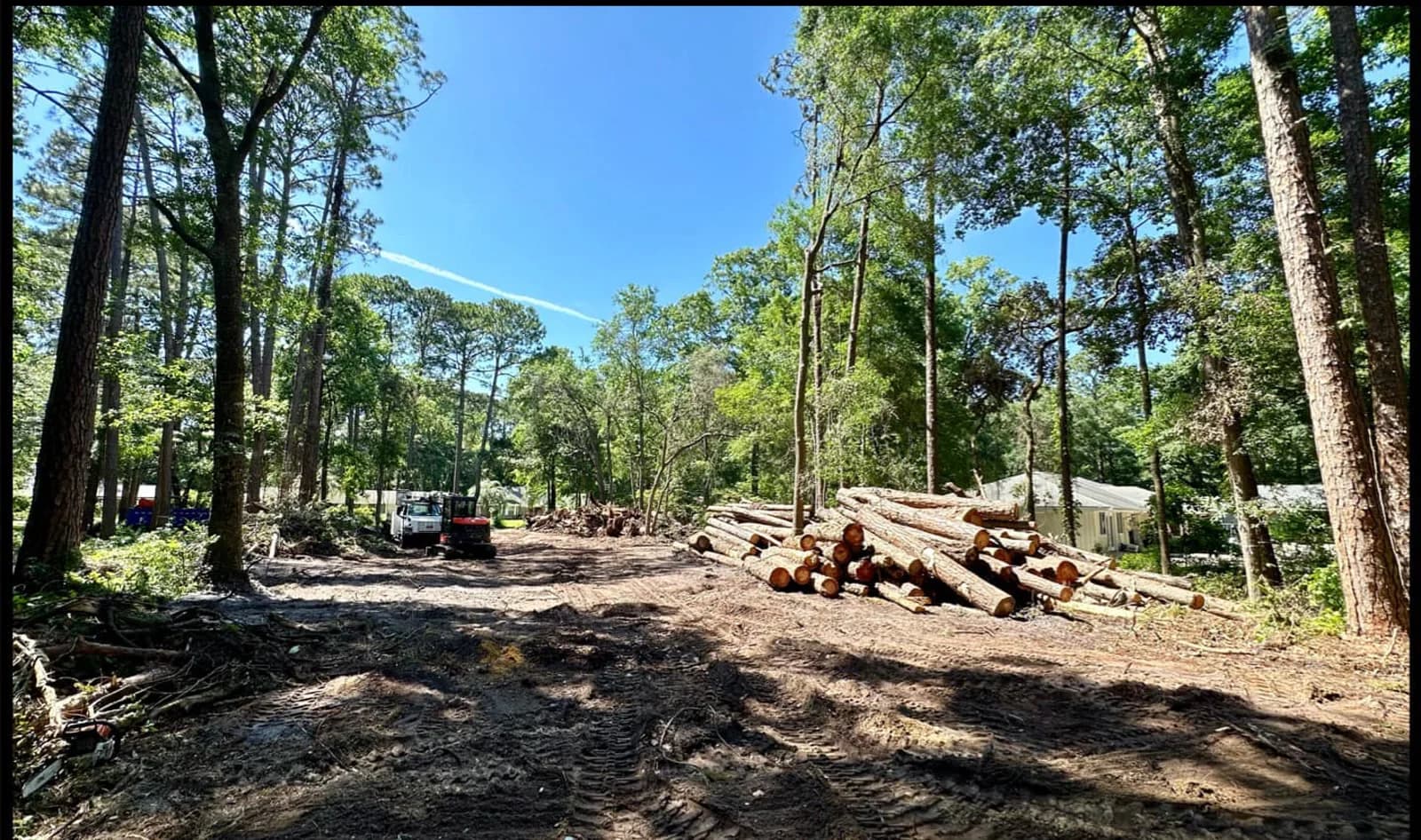
Reclaim an overgrown area
Open a defined part of the property where dense brush has limited visibility, access, or practical use.
Reclaim overgrown land with a defined goal.
Down East Land Improvements provides forestry mulching across Eastern North Carolina, with Carteret, Craven, Onslow, and Jones counties as primary service areas. Mulching knocks back brush and selected vegetation so you can reclaim access or usable ground. Vegetation, terrain, hidden obstacles, utilities, protected areas, and equipment access all affect the scope.
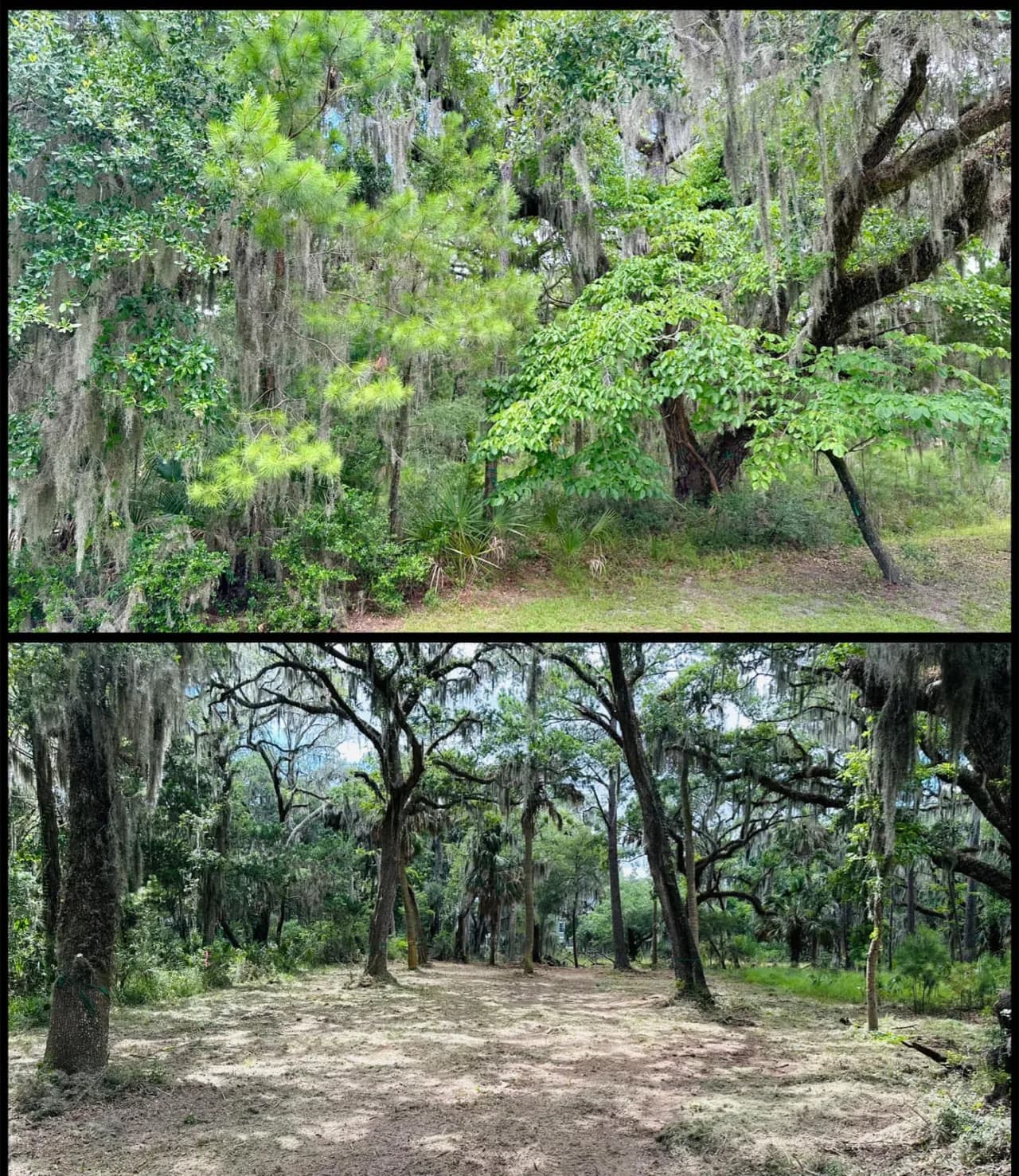
Forestry mulching can open overgrown ground without treating every part of the property the same. One owner may need a passable route through dense brush, while another wants to reclaim a defined section for easier access or future site work. The useful starting point is the intended result: where the work should stop, which trees and features should remain, and how the cleared area will be used afterward.
Vegetation is only part of the picture. Wet ground, old fencing, discarded material, nearby structures, utilities, and hidden obstacles can all affect access and the work included in the estimate.
The estimate can then define the clearing limits and expected finish without blurring forestry mulching together with separate tree removal, stump work, grading, debris removal, or restoration. That distinction helps you understand what the proposed work addresses and what may need its own scope.
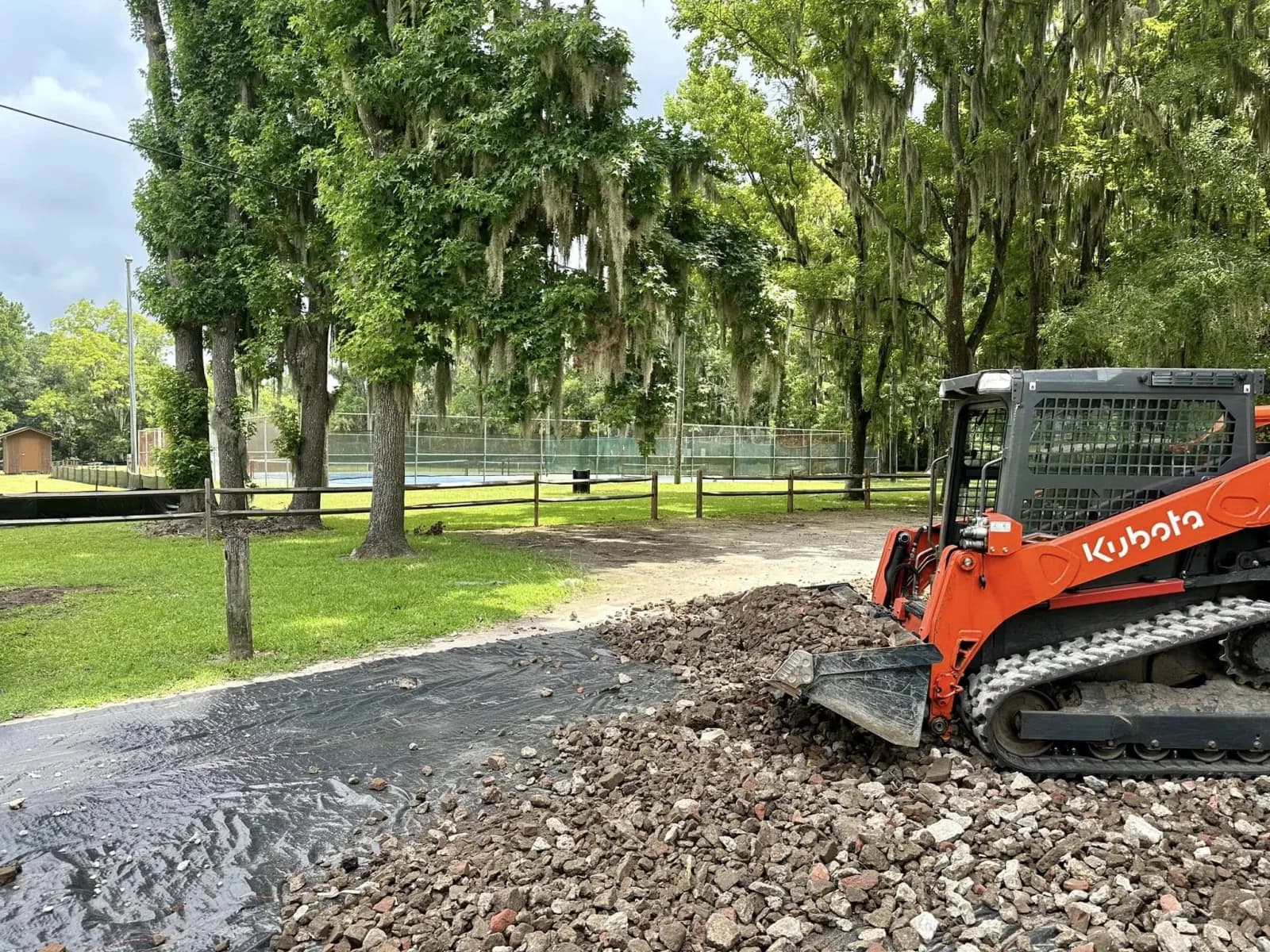
See a similar project below? Tell us where it is and what you would like to accomplish. We’ll inspect the property before recommending the work.
Open a defined part of the property where dense brush has limited visibility, access, or practical use.
Review vegetation along a proposed route, existing path, boundary, or work area that has become difficult to reach.
Clear selected vegetation before a separate grading, excavation, driveway, drainage, or site-preparation project is considered.
Identify what should be addressed and what should remain, including trees, buffers, property features, and no-work areas.
You don’t need to know the exact service. Start with the property and the result you want.
Forestry mulching is selective site work, so the retain-and-remove plan needs to be clear.
Vegetation size, density, and species
Trees or areas that must remain protected
Terrain, wet areas, fences, debris, and hidden obstacles
Equipment access and nearby structures or utilities
Expected finish, mulch handling, and follow-up work
The estimate identifies the work area, vegetation limits, obstacles, and expected finish. Tree removal, stump work, debris removal, grading, or restoration can be scoped separately when the property needs more than mulching alone.
Down East Land Improvements reviews forestry-mulching requests across Eastern North Carolina, with Carteret, Craven, Onslow, and Jones counties as the primary service area. Properties across the region vary widely in vegetation, soil, drainage, and equipment access, so the estimate is based on the actual property rather than a generic acreage description.
If your property is outside those four counties, you can still send the address and project details. The main service area is not a hard boundary; location, project fit, access, and current availability are considered before the request is confirmed.
These answers cover the basics. We inspect the property before pricing the work.
Mulching generally processes vegetation into material that remains on the ground, but the exact finish depends on vegetation, terrain, equipment, and project scope. Expectations should be confirmed before work begins.
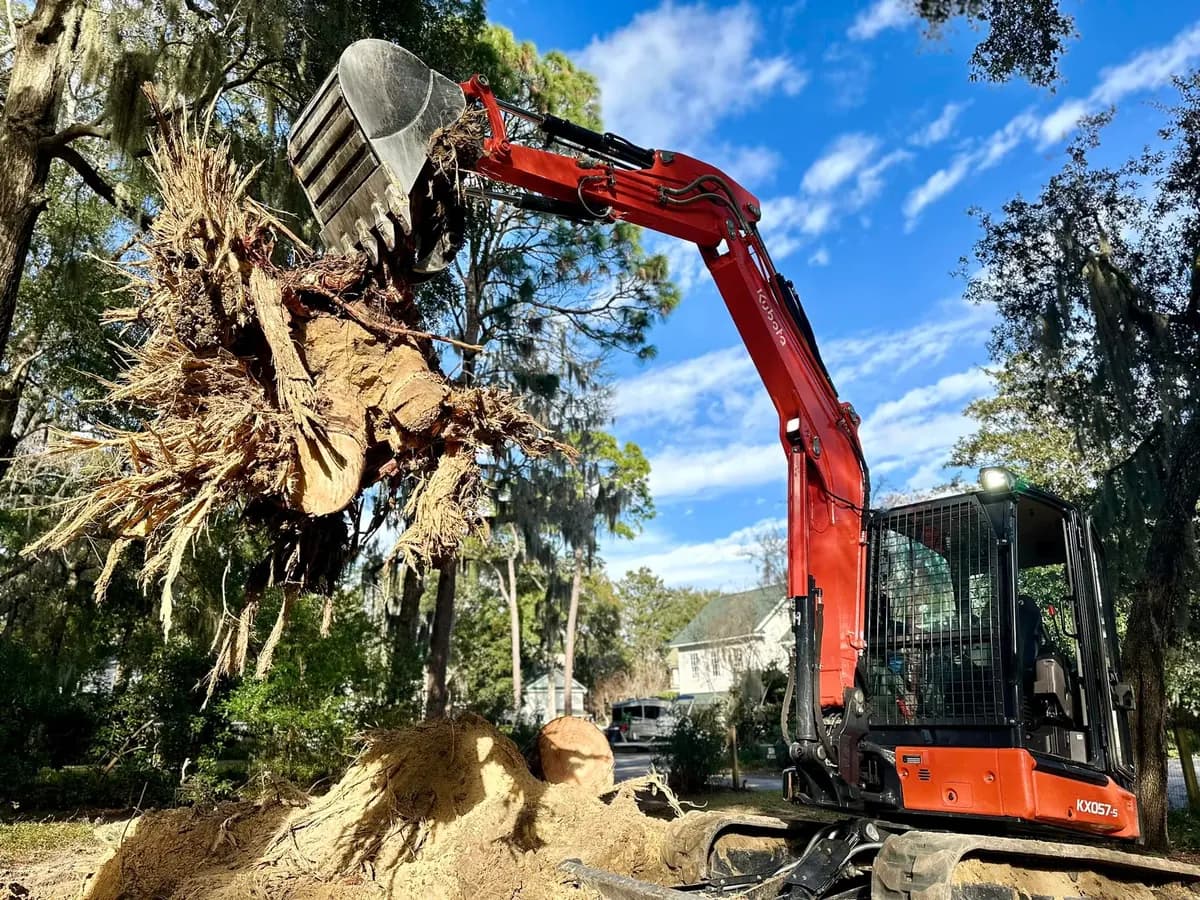
Tree size, condition, location, and stump requirements affect the appropriate method. Larger or hazardous trees and complete stump removal may need a separate tree-and-stump scope.
Share any known fences, wire, trash, concrete, wells, septic components, utilities, wet areas, or structures. Hidden material can change equipment access, safety, and the work that can be performed.
Send the address, what is there now, and what you need done. Down East will call to discuss the request, confirm whether the project is a fit, and explain the next step.