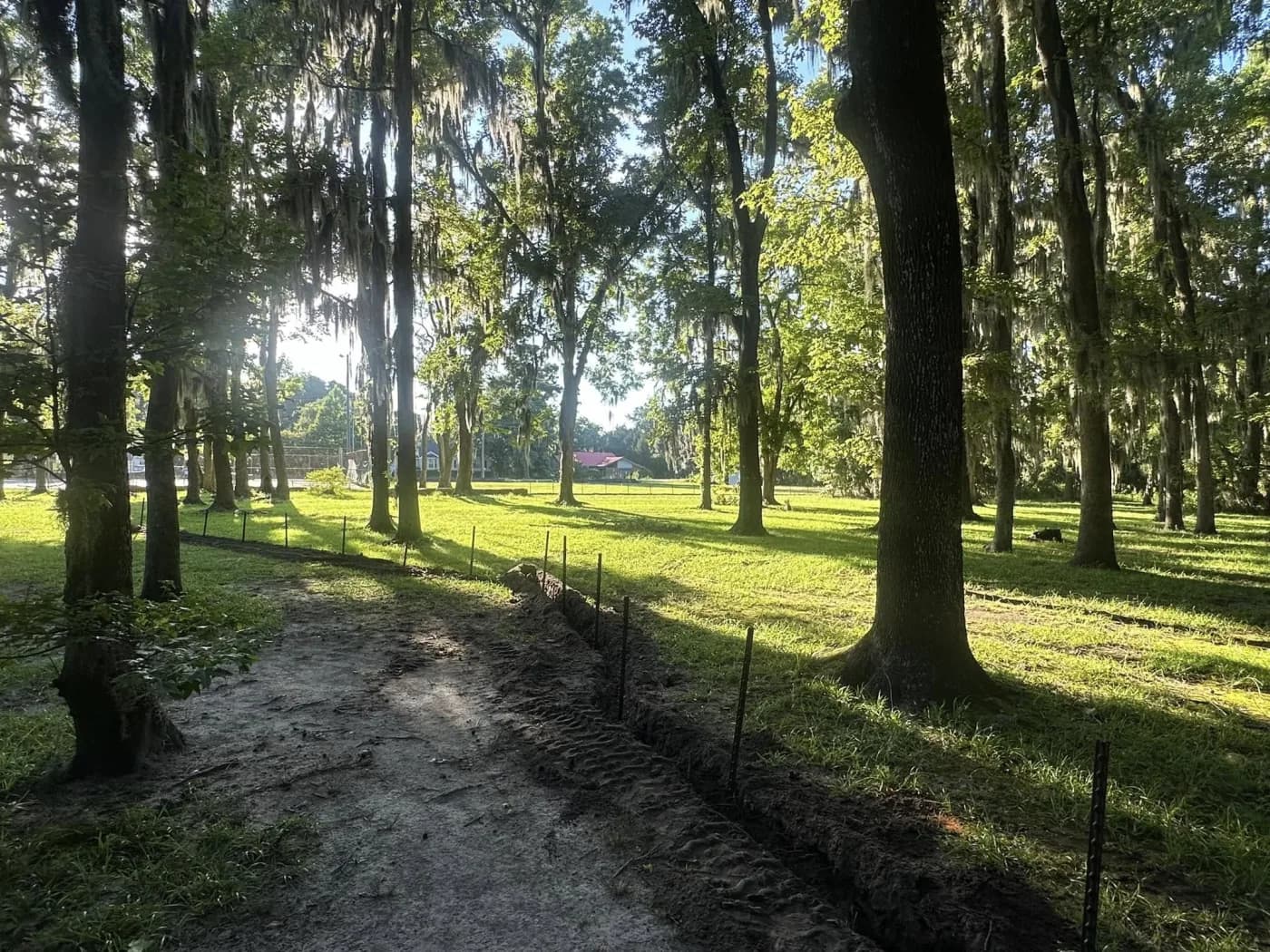
Persistently wet strips of ground
Evaluate a defined area that stays wet and determine whether the soil, slope, water source, and outlet support a subsurface collection route.
A drainage path built for the site.
Down East Land Improvements installs French drains across Eastern North Carolina, with Carteret, Craven, Onslow, and Jones counties as primary service areas. A French drain can collect and redirect water when the property has a workable route and outlet. Soil, slope, water source, nearby structures, utilities, and the discharge point all affect the estimate.
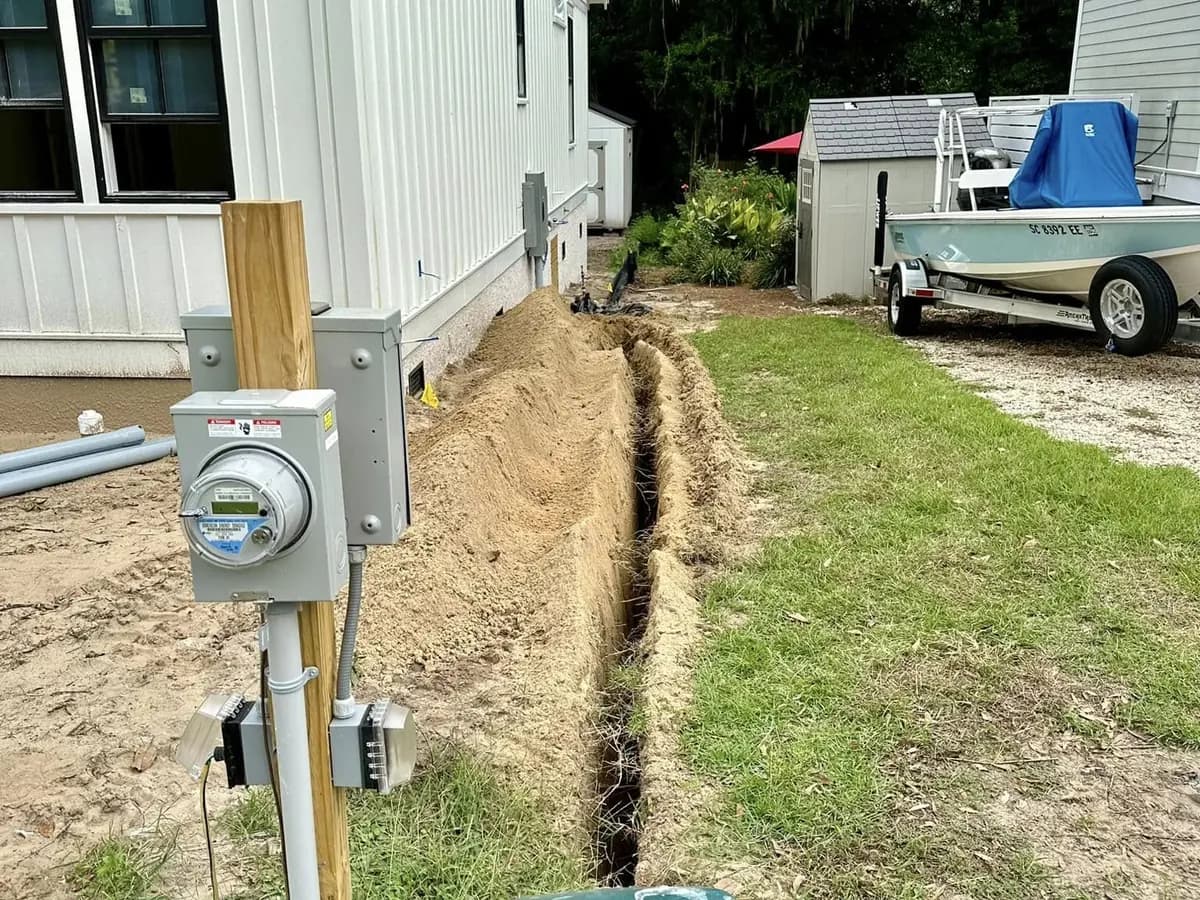
A French drain is one possible response to a wet area, but it is not the right answer for every water problem. The property must offer a sensible place to collect subsurface or surface water, enough fall for the proposed route, and an appropriate location where that water can discharge. Soil, groundwater, surrounding runoff, and nearby improvements can all change the recommendation.
A French-drain estimate looks beyond the proposed trench line. It accounts for when the area becomes wet, where the water may originate, how the ground is shaped, whether surface grading could be part of the solution, and nearby structures, utilities, boundaries, or access limits.
Homeowners do not need to determine the drainage method before requesting an estimate. Show the affected area and explain what you want to protect or make usable. If a French drain fits, the estimate can define its collection route, outlet, related excavation, and finish; if another approach fits better, that will be reflected in the scope.
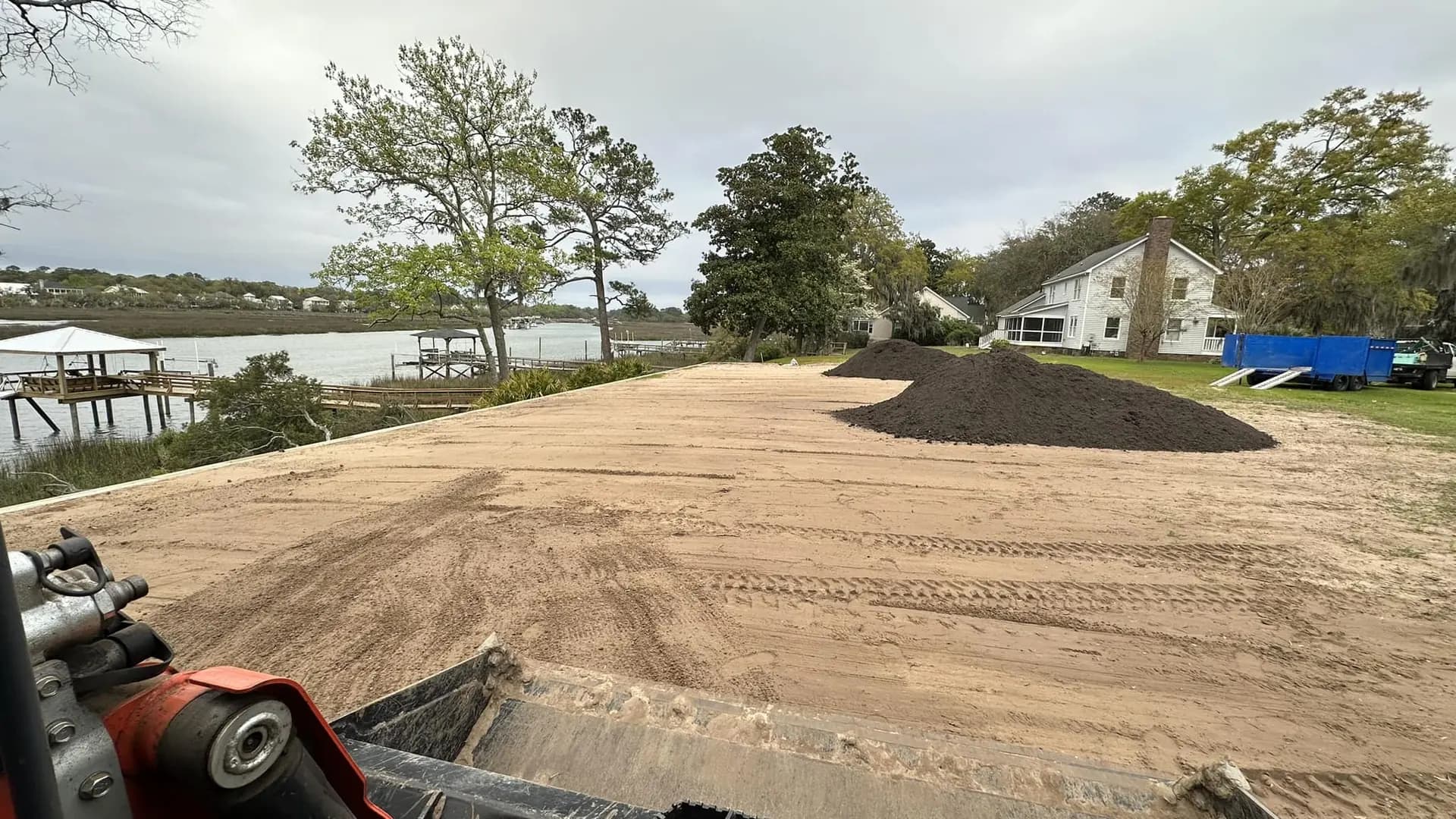
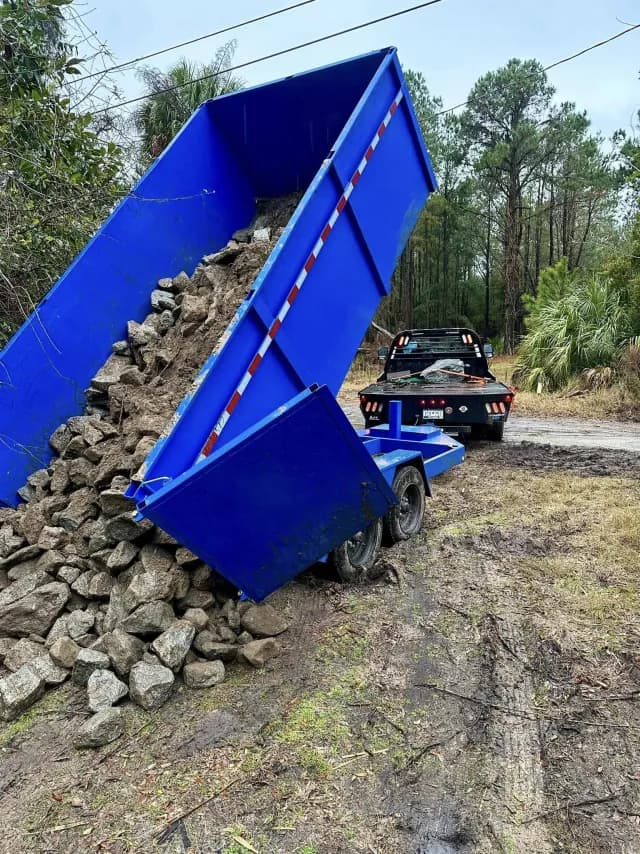
See a similar project below? Tell us where it is and what you would like to accomplish. We’ll inspect the property before recommending the work.
Evaluate a defined area that stays wet and determine whether the soil, slope, water source, and outlet support a subsurface collection route.
Review moisture affecting a yard, path, or other usable area while accounting for adjacent grades, runoff, structures, and underground constraints.
Consider whether water from a low section of the property can be collected and moved along a responsible route without creating another problem.
Assess whether surface shaping and a subsurface drain belong in the same estimate when neither approach fully addresses the site by itself.
You don’t need to know the exact service. Start with the property and the result you want.
The drain must have a useful place to collect water and a responsible place to send it.
Source and frequency of the water
Available slope and discharge location
Soil conditions and expected drainage behavior
Utilities, foundations, boundaries, and access
Trench length, aggregate, pipe, fabric, and finish restoration
The estimate identifies where the drain begins, how it will be built, where it ends, and how the disturbed ground will be left. If grading or another drainage method makes more sense, that will be reflected in the scope.
Down East Land Improvements provides French-drain evaluations across Eastern North Carolina, primarily serving Carteret, Craven, Onslow, and Jones counties. Properties outside those counties may also be reviewed depending on their location and the requested work.
Soil, slope, runoff, access, and usable outlets vary from one property to the next. The estimate is based on the actual water problem rather than a one-size-fits-all trench recommendation.
These answers cover the basics. We inspect the property before pricing the work.
It may help when the water source, soil, slope, and outlet support that approach. A site review is needed because standing water can also relate to grading, runoff from another area, a blocked drainage route, or high groundwater.
It needs a workable outlet. We look at slope, nearby structures, property boundaries, and local rules before recommending where the collected water should go.
Provide the property location, photos of the wet area, when the problem occurs, and any known drains or utilities. That information helps Down East understand the issue before calling to discuss the request.
Send the address, what is there now, and what you need done. Down East will call to discuss the request, confirm whether the project is a fit, and explain the next step.